
New research shows that magmatism played a role in global warming in the Geologic past
Wed, 02/13/2019 - 7:43amTop Stories
The University of Louisiana at Lafayette takes IBA AAPG North America Semi-Final 1st place
Proud to share that the IBA team at University of Louisiana at Lafayette earned 1st place at the North American Semi
Brian Schubert, an Associate Professor in the School of Geosciences, together with colleagues from Norway, the UK, the Netherlands, and Denmark, published a new paper on the Palaeocene–Eocene Thermal Maximum, an extreme global warming event that occurred 55.8 million years ago.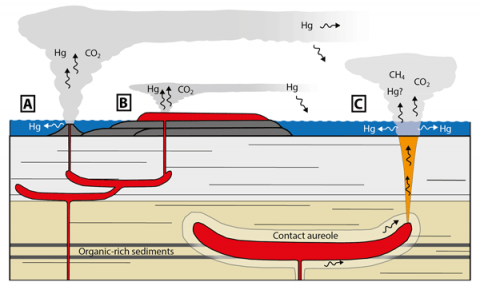
They studied mercury anomalies in sedimentary rocks from five sites that cover the event to assess whether there were periods of elevated volcanism associated with global warming. Their work showed that sites close to the eruptions from the North Atlantic Igneous Province displayed significant mercury anomalies across this time interval, suggesting that magmatism played a role in the observed global warming.
This work was published in Climate of the Past