
The rupture mechanisms of intraslab earthquakes: A multiscale review and re-evaluation
Thu, 09/30/2021 - 8:27amTop Stories
The University of Louisiana at Lafayette takes IBA AAPG North America Semi-Final 1st place
Proud to share that the IBA team at University of Louisiana at Lafayette earned 1st place at the North American Semi
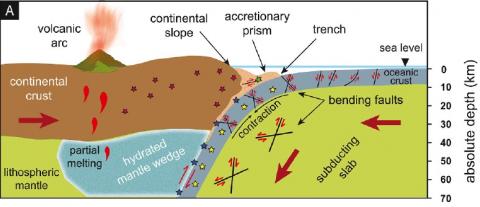
Our first graduate in the EESC PhD, Dr. Elham Hosseinzadesabeti, published her second paper as first author in Earth Science Reviews. Congratulations!
Shallow depth seismicity (less than 70 km) occurs in the overriding plate, the accretionary wedge, along the megathrust, and within the subducted slab (intraslab). The distinction between these closely located sources can be, in some cases, challenging particularly in the top twenty kilometers.
The pre-subduction deformation history, faulting and hydration of the oceanic slab strongly influences subduction-related seismicity. Not only hydrated normal faults commonly undergo dehydration and/or reactivation but also slab bending and unbending constitute seismogenic processes.